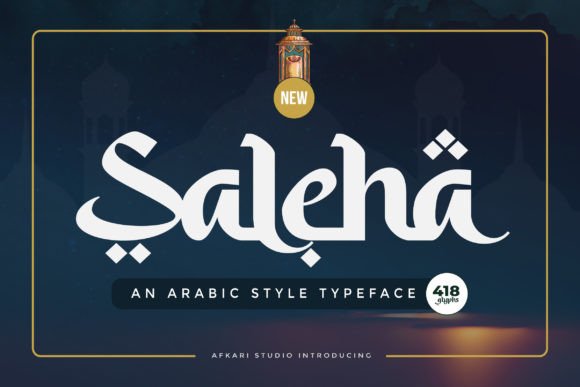
Saleha: The Premium Arabic Display Typeface for Modern Web Design
In the world of digital product creation, typography is rarely just about legibility; it is the primary vehicle for brand tone and emotional connection. When building a website that needs to convey authenticity, heritage, or a specific cultural identity, standard Latin typefaces often fall short. This is where Saleha, an Arabic-styled display typeface, becomes an essential asset for web designers and UI creators looking to elevate their visual hierarchy.
Saleha is not merely a decorative element; it is a functional tool designed to bring an authentic Islamic and Arabic feel to every text block you create. Whether you are designing a landing page for a Ramadan campaign, a boutique online store specializing in traditional goods, or a creative portfolio for a designer targeting a Middle Eastern audience, Saleha offers the perfect balance of artistic flair and structural integrity. As a premium font, it provides the polish required for professional client projects while maintaining the warmth needed for user engagement.
Defining Visual Hierarchy with Saleha
Effective web design relies heavily on guiding the user's eye through a clear path of information. A display font like Saleha excels at establishing this hierarchy immediately. Its unique calligraphic strokes and distinct character shapes draw attention naturally, making it ideal for hero sections, main headlines, and section dividers. When placed against a clean background, Saleha commands authority without shouting, setting a sophisticated tone before the user even reads the body copy.
In a conversion-focused layout, the difference between a generic header and a branded one can impact click-through rates. Using Saleha for your primary value proposition allows you to communicate a sense of exclusivity and care. For instance, on a course sales page, replacing a standard sans serif headline with Saleha can transform the perceived value of the content, suggesting a curriculum that is as thoughtful as its presentation. The font's intricate details work well for short phrases, logos, and logo design elements where space is limited but impact must be high.
Ideal Applications Across Digital Products
- Landing Pages: Use Saleha for the main headline to instantly establish a cultural or thematic context, ensuring visitors understand the niche within seconds.
- Online Stores: Apply the font to banner graphics and category headers to enhance the shopping experience for products rooted in tradition or craftsmanship.
- Blog Graphics: Create consistent visual identity by using Saleha for article titles, distinguishing them from the body text which should remain highly readable.
- Digital Ads: Leverage its decorative nature in social media graphics and paid ad banners where stopping the scroll is the primary goal.
- Portfolio Sites: Showcase creativity by using Saleha as a signature typeface that defines your personal brand identity.
Readability and User Experience Considerations
While Saleha is a stunning display font, its application requires strategic thinking regarding usability. In web design, we must prioritize the user experience (UX) above all else. Because Saleha features complex curves and artistic flourishes, it is best reserved for headlines, buttons, and short phrases rather than long paragraphs of body copy. Attempting to use it for extended reading on mobile screens can lead to cognitive fatigue and reduced comprehension.
For responsive layouts, consider how Saleha performs on smaller devices. On mobile phones, the intricate details might get lost if the font size is too small. To maintain clarity, ensure that Saleha is used at a larger point size in hero sections or as a decorative accent over images. When placing Saleha over image overlays or dark backgrounds, pay close attention to contrast. You may need to add subtle drop shadows or adjust the background opacity to ensure the text remains crisp and accessible.
If your project involves mixed-language content, such as English body text with Arabic-style headings, Saleha serves as a bridge. It introduces a unique aesthetic that breaks the monotony of standard web typography. However, always pair it with a neutral, simple sans serif font for the body text. This pairing strategy ensures that while the headings capture attention, the content remains easy to scan and digest. A modern typography approach often involves this contrast: a bold, expressive display font working in harmony with a clean, utilitarian typeface.
Font Pairing Strategies for Web Identity
The success of Saleha in a digital environment often depends on what you pair it with. Since Saleha acts as a script font or handwritten font in spirit, it demands a partner that does not compete for attention. A geometric sans serif font is often the best choice for body copy, creating a balanced look that feels both contemporary and timeless. Alternatively, for editorial design projects or blogs that aim for a more literary feel, pairing Saleha with a classic serif font can create a rich, textured digital identity.
When designing email templates or newsletter headers, this combination works exceptionally well. The Saleha header sets the mood, while the sans serif body ensures that the message is delivered clearly. This duality supports a brand voice that is both culturally grounded and professionally modern. By mixing these styles, you avoid the "decorative overload" that can make a site look cluttered, instead achieving a refined aesthetic that builds trust with your audience.
Technical Implementation and Licensing
Before integrating Saleha into your web projects, it is crucial to verify the technical specifications included in your download. Most premium fonts come in various file formats, including OTF, TTF, and WOFF/WOFF2, which are essential for webfont availability. Ensure that the package includes the necessary weights and alternates that allow for flexibility in your design system. Some versions of Arabic-styled fonts include multiple ligatures or stylistic sets that can significantly alter the flow of the text, adding another layer of customization to your designs.
For digital product creators, checking multilingual support is also vital if your audience spans different regions. While Saleha is primarily an Arabic-styled typeface, understanding its limitations and strengths helps in planning your content strategy. If you are building a SaaS platform or a global e-commerce site, knowing exactly which characters are supported prevents layout breakage and ensures a consistent online identity across all markets.
Finally, always review the commercial font licensing terms before deploying Saleha in client work. Commercial font licenses typically cover usage in websites, online stores, landing pages, and digital templates. Whether you are creating a single-page app or a full-scale corporate website, having the correct license protects you and your clients from legal issues. It ensures that your use of this creative font aligns with industry standards and respects the intellectual property of the type designer.
By thoughtfully applying Saleha, you move beyond simple decoration to create a cohesive, engaging digital experience. It transforms static text into a dynamic part of your brand narrative, proving that the right typeface can define the success of your web design projects.